

Definition of Run-to-Failure Maintenance
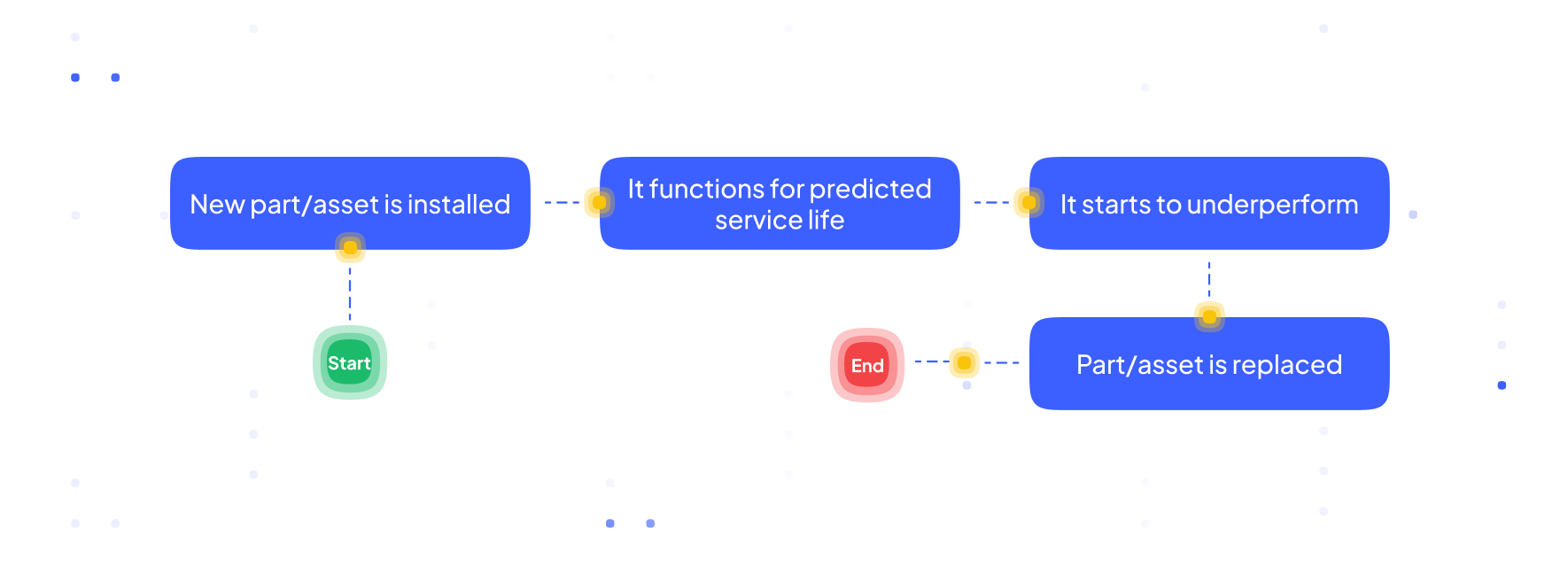
Run-to-failure maintenance, also known as “breakdown maintenance”, is a maintenance strategy where an asset or piece of equipment is allowed to operate until it fails or breaks down before any maintenance or repairs are performed. In this approach, maintenance actions are only taken when the equipment has stopped working or is no longer operational, making it distinct from proactive strategies supported by asset management software.
Benefits of Run-to-Failure Maintenance
Despite its unconventional nature, run-to-failure maintenance (RTF) offers several advantages that make it a compelling strategy in certain circumstances. One key benefit is its cost-effectiveness. By avoiding preemptive maintenance, organisations can save on unnecessary repairs and reduce downtime, leading to time savings. Additionally, this approach is particularly applicable to non-critical assets, where minor failures may not significantly impact operations or safety, making it a practical choice of easy implementation that can be managed alongside other maintenance strategies using cmms software.
When to apply Run-to-Failure Maintenance
To grasp the rationale behind implementing run-to-failure maintenance, it is essential to explore specific use cases where this approach excels. We will examine why non-critical assets are ideal candidates for this strategy and how certain equipment’s inherent reliability supports the decision to run it until failure.
When implementing run-to-failure maintenance across multiple locations or complex facilities, effective coordination becomes paramount. Comprehensive oversight of various maintenance strategies, including RTF approaches, can be achieved through facility management software, which helps organisations balance different maintenance philosophies whilst maintaining operational efficiency.
Evaluating risk factors and understanding the consequences of potential failures are essential considerations. Striking a balance between run-to-failure maintenance and other maintenance approaches can optimise equipment performance whilst controlling costs.
Here are some examples of when RTF might be applied:
Whilst run-to-failure maintenance may appear less structured than preventive approaches, organisations must still maintain proper documentation and regulatory compliance. Compliance management software ensures that all maintenance activities, including reactive repairs following equipment failures, meet industry standards and regulatory requirements, providing essential audit trails and documentation.
- Light Bulbs: In residential or small-scale applications, run-to-failure maintenance is often applied to light bulbs. Since the cost of replacement is relatively low and the failure of a single light bulb is not critical, it may not be cost-effective to perform preventive maintenance on each individual bulb.
- Assets with a Short Life Span: Assets that have a short life span can be easily replaced once they reach the end of their life cycle. These assets include items like batteries, water heaters, and digital controls.
- Non-Critical Appliances: Equipment that just isn’t crucial to production can be replaced without impacting a facility’s output.
- Recreational Equipment: Recreational facilities, like amusement park rides or coin-operated machines, may use run-to-failure maintenance for certain low-cost equipment. The cost of downtime or replacement is relatively low compared to the cost of performing regular maintenance.
- Low-Value Components: In complex systems, there may be some low-value components that do not significantly impact the overall operation. In such cases, it might be more practical to allow these components to run until they fail before replacing them.
- Temporary or Short-Term Installations: For temporary installations or projects with a short lifespan, such as events, it may not be necessary to perform preventive maintenance, and run-to-failure maintenance can be a reasonable approach.
✖ Please note: RTF is not suitable for critical systems or equipment where failure could lead to significant safety hazards, financial losses, or harm to the environment. For such cases, preventive maintenance strategies are more appropriate to ensure reliability and avoid failures.
How to Apply a Run-to-Failure Maintenance Programme
Implementing a RTF maintenance programme requires establishing monitoring and alert systems, setting appropriate thresholds for triggering maintenance actions, and training maintenance personnel for efficient execution. Building a cohesive team that understands the objectives of run-to-failure maintenance is paramount to achieving positive outcomes.
Particularly for organisations with distributed assets, the success of RTF maintenance hinges on rapid response capabilities when failures inevitably occur. Field service management software becomes crucial for minimising downtime and coordinating repair activities effectively, ensuring that maintenance personnel can respond swiftly to equipment breakdowns in various locations.
By aligning run-to-failure actions with preventive and predictive maintenance tasks, organisations can strike a harmonious balance between different maintenance strategies.
Organisations managing extensive facility portfolios often require sophisticated coordination tools to harmonise different maintenance strategies effectively. A cafm system enables maintenance teams to track asset performance and coordinate maintenance activities across their entire portfolio, including assets managed under run-to-failure strategies, ensuring optimal resource allocation and strategic alignment.
Also, in today’s digital age, Intelligent Maintenance Management Platforms (IMMP) have emerged as invaluable tools for planning and executing maintenance approaches, RTF included. Leveraging advanced data analytics, these platforms enable informed decision-making, ensuring optimal equipment performance and reliability.
Successful run-to-failure maintenance implementation also depends on having the right resources available when equipment failures occur. Modern maintenance teams benefit from integrated systems that track spare parts and equipment availability through inventory management software, ensuring maintenance personnel have the necessary resources to respond efficiently to unexpected breakdowns.
Using an IMMP, maintenance teams can proactively create work order templates and allocate tasks whenever maintenance requirements arise.